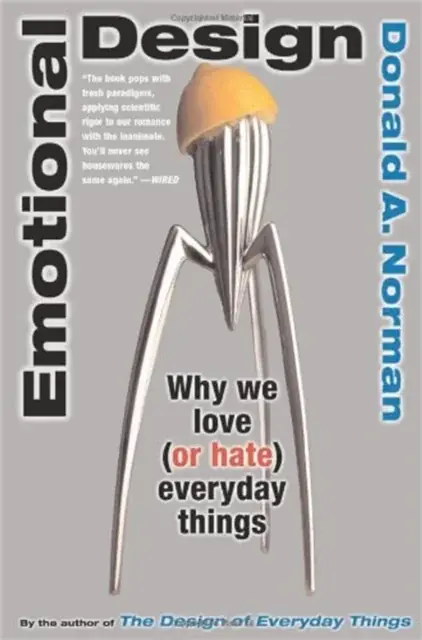
Every time we encounter an object, our reaction is determined not only by how well it works, but by how good it looks to us, and by the self-image, loyalty and even nostalgia it evokes in us.By the author of the best-selling The Design of Everyday Things, the first book to make the crucial connection between our emotions and how we relate to ordinary objects – from juicers to Jaguars Have you ever wondered why cheap wine tastes better in fancy glasses? Why top-of-the-range sporting equipment seems to improve your performance? Why sales of Macintosh computers soared when Apple introduced the colourful iMac (even though the computer itself was identical to the old one)? New research on affect and cognition has shown that attractive things really do work better, a fact designers and fans of Don Norman’s classic The Design of Everyday Things can’t afford to ignore. In the last decade, the design community has focused its efforts on making products easier to use. But as Norman demonstrates in this fascinating and important new book, we don’t just use a product, we become emotionally involved with it. Emotional Design demonstrates and analyzes for the first time the profound influence of this deceptively simple idea.; Every time we encounter an object, our reaction is determined not only by how well it works, but by how good it looks to us, and by the self-image, loyalty and even nostalgia it evokes in us. When a product is aesthetically pleasing, behaves the way we expect it to, and plays to our ideas about ourselves and society, we experience it positively. That’s why some people are willing to spend thousands on a Rolex even though a cheaper digital watch keeps just as good time. Don Norman addresses these and other provocative questions – drawing on a wealth of examples and the very latest scientific insights – in this bold exploration of the objects in our everyday world. His best-selling Design of Everyday Things showed why the products we us
Frakt og levering
Rask og pålitelig levering
Fri frakt over 788 kr